|
|
|
Unsubscribe | View in Browser |
Monday, May 11 |
 |
|
Welcome to Your Daily Dot where Dot will share tips, advice, and stories on how we can make our world better. |
|
|
|
|
|
If you purchase anything via one of our links, including from Amazon, we may earn a small commission.
All Dear Dot illustrations by Elissa Turnbull. |
|
|
|
|
|
|
|
Dear Reader,
Welcome back to Mythbuster Monday. Today, Dot considers whether wild-caught fish is a better environmental choice than farmed.
Climate math can be hard (didn’t Teen-Talk Barbie say something like that?)! Consequently, it’s not uncommon for Dot, whose son recently converted to pescatarianism, to find myself stymied in the seafood section of the grocery store. Is wild-caught fish better?
How I wish there was a simple, straightforward answer. Instead, like so many climate-conscious consumer choices, the answer depends.
|
 |
|
Let’s start by noting that farmed fish (produced via aquaculture) continues to suffer from accusations of, as Anthropocene put it in its analysis of farmed vs. wild, “crowded pens, antibiotics, polluted bays, and the irony of feeding wild fish to captive ones.” But, they note, while not perfect, aquaculture has come a long way.
Simultaneously, plenty of wild fish stocks are under threat of population collapse.
But … which carries the higher environmental cost, farmed or wild-caught? What do the numbers say?
Well, of course, each has its impact. For wild fish, boat fuel is the single biggest contributor (60–90%) to the industry’s total carbon emissions. There’s a slow shift toward vessel electrification, which could change the math. For farmed fish, it’s fish feed, at about 55%, most of which comes from the carbon emissions involved in catching the wild fish being fed to the farmed fish. (See why Dot’s brain hurts?)
The Our World in Data folks note that, while some wild-caught fish can be better, farmed fish is a safer bet.
Another (surprising) safe bet? Canned seafood, largely because it’s what they call “shelf-stable,” meaning there’s likely to be no waste. Anthropocene explains: “About 25% of the seafood harvest (farmed or wild) is lost to food waste. Food waste can generate emissions on its own, by releasing methane as it rots … [but] Johns Hopkins found that a kilo of canned seafood only released a bit over 5 kilos of carbon dioxide on average, compared to roughly 15 for fresh or frozen options.”
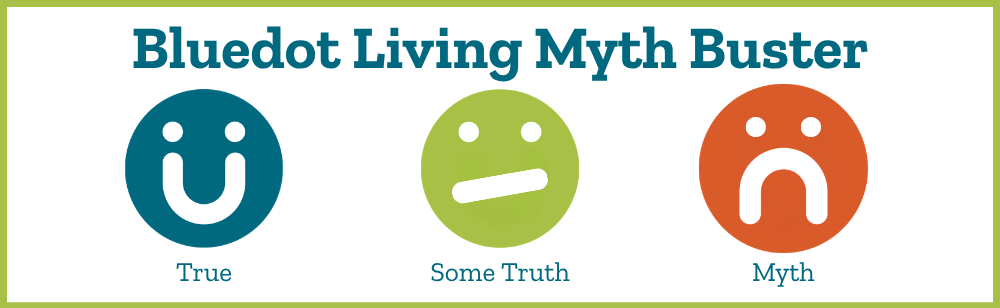
So it is a myth that wild fish is always better than farmed. But it’s also a myth that farmed is always better than wild. In short, you’re going to have to fish around for the answer, depending on which species you want to eat. A sure bet? Farmed bivalves (oysters, mussels, clam, scallops) and seaweed! Or head to the canned good sections of your grocery store. Eating lower on the fishy food chain is another smart choice — for your health and the health of the planet. Small fish are highly nutritious and less likely than larger fish to contain contaminants like mercury, and eating them (rather than processing them into fish meal to feed larger fish) is more energy-efficient.
|
|
|
|
|
|
|
 |
|
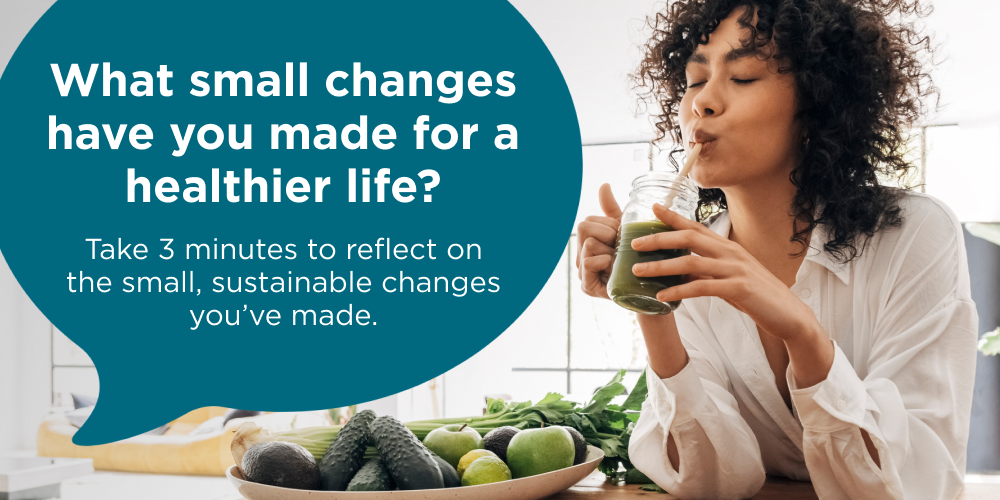
From wasting less food to choosing more plant-based meals or rethinking how you shop — small changes add up. We’d love to hear what’s different for you. This quick, 3-minute survey is a chance to reflect on your habits and help shape future Bluedot Living content around what matters most to you.
As a thank you, you’ll receive 20% off in our online store after completing the survey.
|
| Take the Survey |
|
|
|
|
|
|
|
Paid Advertisement with Oricle Hearing |
|
Brain-Boosting Hearing Innovation
|
 |
|
When your hearing struggles, your brain works overtime to fill in the gaps, which can affect memory, focus, and energy over time. Horizon IX from hear.com lightens that load. This tiny, virtually invisible device uses advanced German dual-processing technology to separate speech from background noise, so conversations feel effortless again. Built for modern life and all-day comfort, it’s available with a 45-day no-risk trial so you can hear the difference for yourself. |
| Qualify Today |
|
|
|
|
|
|
|
|
|
|
|
|